2026 BUYING GUIDE · EMERGENCY POWER
Best Portable Power Stations for Apartment Outages in 2026
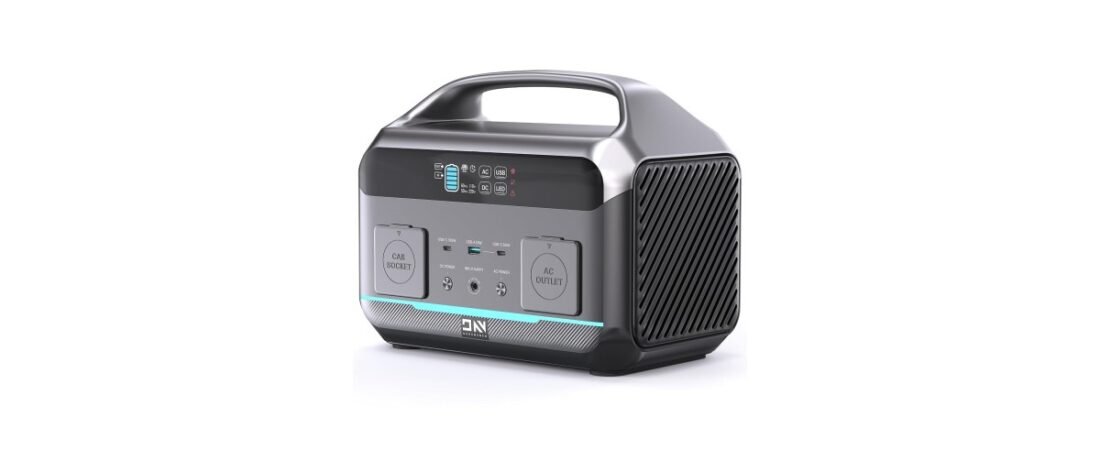
If the lights go out in an apartment, you cannot safely start a gas generator on the balcony. A portable power station gives you quiet battery backup for communication, work, lighting and selected appliances without combustion fumes.
Affiliate disclosure: As an Amazon Associate, Mobile Gear Picks earns from qualifying purchases. We may receive a commission at no extra cost to you. Prices and availability can change.
How to choose power stations for an apartment outage
Imagine the power fails at 6 p.m. Your phone is at 28%, your router is off and tomorrow is a workday. Would staying connected solve most of the problem, or do you also need to protect refrigerated food? That answer determines the battery size.
When comparing power stations, focus on the equipment you truly need during the first hours of an outage. Portable power stations have two important ratings. Watt-hours (Wh) describe stored energy. Watts (W) describe how much power the inverter can deliver at one time. A 1,000Wh battery does not automatically run every appliance. The inverter must also handle the appliance running load and its startup surge.
What size power station makes sense?
300 to 600Wh
Best for essentials. Phones, tablets, LED lights, router and several laptop charges. Easier to lift and store in a closet.
800 to 1,200Wh
Best all-around. A stronger fit for remote work, several people and selected refrigerator operation.
1,500Wh or more
Best for longer backup. More runtime, but also more weight, cost and storage space.
Power stations runtime: simple math you can actually use
Use this planning estimate: runtime in hours = usable battery capacity in Wh ÷ device draw in W. Real output is lower than the advertised capacity because the inverter, temperature and battery management system consume energy. For rough planning, using 80% to 85% of rated capacity is more realistic than assuming 100%.
| Device | Typical planning load | What a 1,000Wh class unit may provide |
|---|---|---|
| Router and modem | 15 to 30W combined | Roughly a full day or longer, depending on equipment |
| Laptop | 40 to 100W while working | Several full charges or many working hours |
| LED lamp | 5 to 12W | Multiple nights of efficient lighting |
| Refrigerator | Cycles on and off; startup surge varies | Highly variable, so check actual wattage and test safely |
Different power stations can deliver different real-world efficiency even when the advertised capacity looks similar. These are planning ranges, not guarantees. Measure your own devices with a plug-in power meter when possible, and check the power station manual for surge limits.
Three power stations classes worth comparing
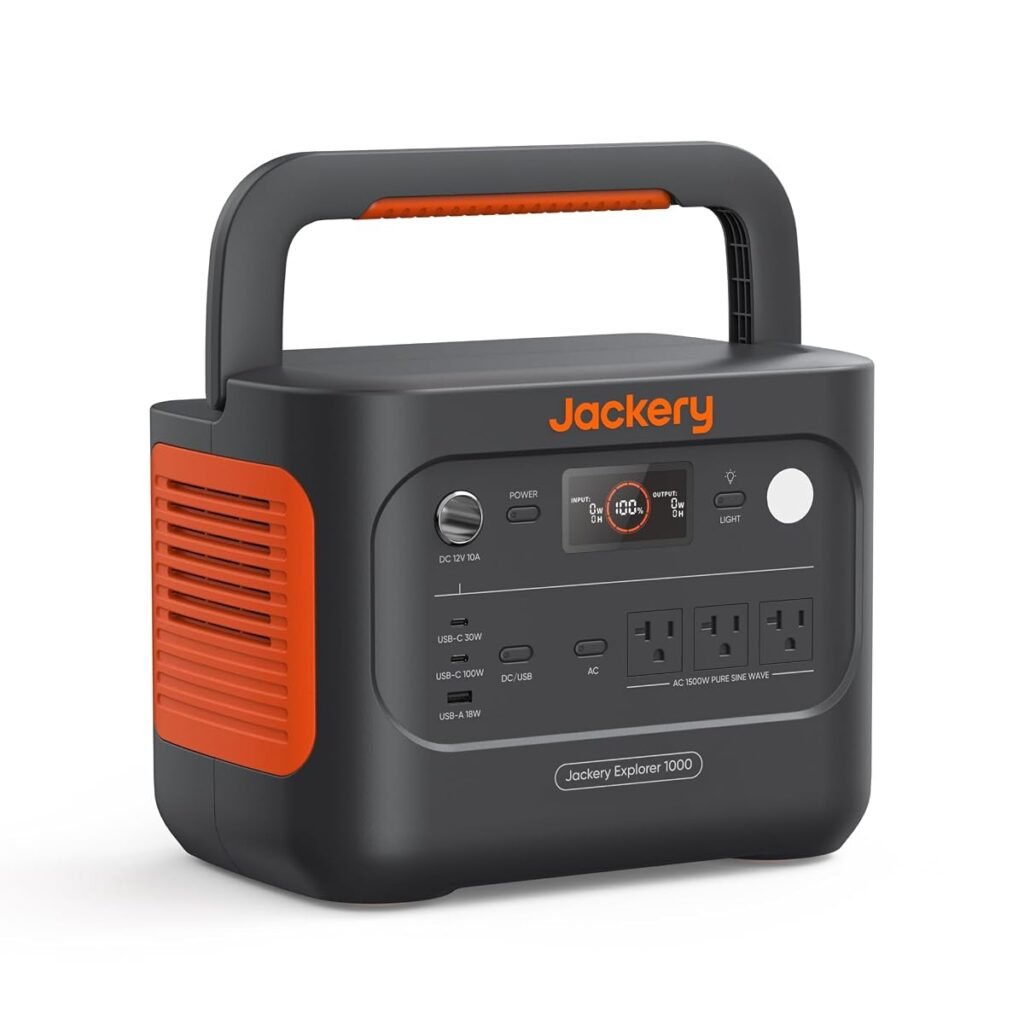
Jackery Explorer 1000 v2 class: straightforward apartment backup
This size works well for people who want one unit for a home office, communications, lighting and occasional appliance support. It is not whole-apartment backup, but it offers enough capacity to make load planning worthwhile. Compare current outlet count, charging speed, noise, weight and warranty on the live listing.
Check Jackery details and price
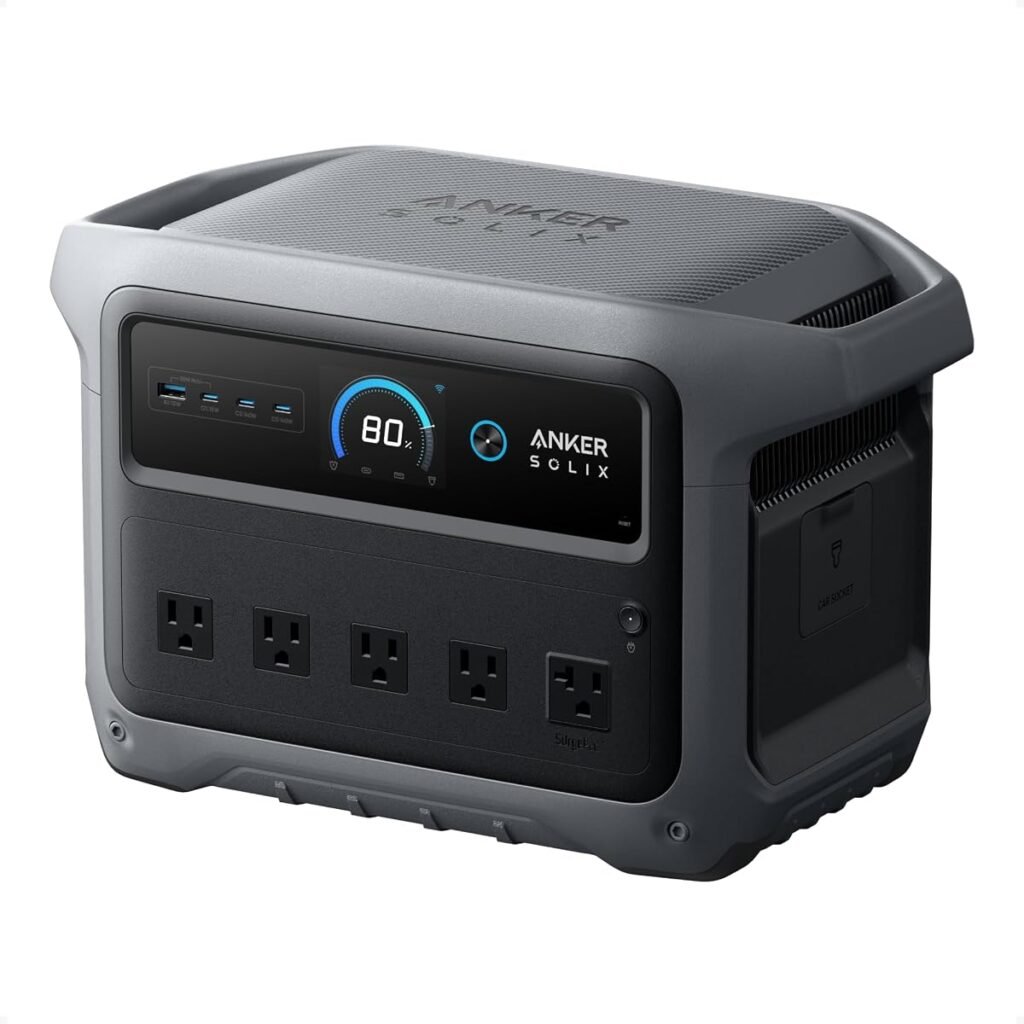
Anker SOLIX C1000 Gen 2 class: fast recharge and flexible output
A 1,000Wh-class SOLIX unit is another strong comparison for apartment residents who need a capable inverter and convenient ports. Fast wall charging can be valuable after rolling outages because it lets you refill during a short window of restored utility power. Confirm the current model specifications because similarly named generations can differ.
Check Anker SOLIX details and price
Smaller 300 to 600Wh stations: enough for staying connected
If your priority is a router, two phones, a lamp and a laptop, a smaller station may be the human-sized solution. It is less expensive, easier to move and more likely to remain accessible instead of being buried behind boxes. The tradeoff is limited support for refrigerators and other higher-demand equipment.
Can power stations run a refrigerator?
Some power stations can support a refrigerator, but the honest answer depends on the refrigerator. Compressors draw more power at startup, then cycle. A compact modern refrigerator may be manageable while an older full-size model can consume much more. Check the appliance label, allow for surge power and test the setup before an emergency. Keep refrigerator doors closed during an outage to reduce cycling.
Power stations with UPS mode for remote work
Some power stations can remain connected to wall power and switch to battery when power fails. This may keep a modem, router or desktop running through a short interruption. It is not automatically equivalent to a dedicated computer UPS. Check the manufacturer’s stated transfer time and supported use before connecting sensitive equipment.
What about CPAP machines and medical devices?
Never assume a general power station is suitable for critical medical support. Ask the device manufacturer which backup systems, adapters and power settings are approved, and discuss your emergency plan with a qualified clinician when appropriate. Humidifiers and heated tubing can substantially increase CPAP energy use. Test only according to the medical device and battery manufacturers’ guidance.
Power stations safety and storage in apartments
- Never use gasoline, propane or other combustion generators indoors, in enclosed balconies, near doors or near windows.
- Keep a battery station dry, ventilated and away from heaters or direct summer sun.
- Do not cover cooling vents or place the unit where children can pull connected cables.
- Use cables and chargers approved by the manufacturer.
- Check stored charge periodically and follow the manual’s long-term storage guidance.
- Make sure the unit is light enough for the person who may need to move it.
Power stations features that matter more than marketing
| Feature | Why it matters in an apartment |
|---|---|
| LiFePO4 battery chemistry | Commonly chosen for long cycle life and frequent backup use. |
| Clear load display | Helps you see watts, battery percentage and estimated runtime. |
| Quiet fan behavior | Important when the station shares a bedroom or workspace. |
| Manageable weight | A backup you cannot safely lift may be poorly matched to your home. |
| Useful port mix | Enough AC, USB-C and USB-A ports can reduce adapters and cable clutter. |
| Warranty and support | More important than a small difference in headline capacity. |
How we evaluated these power stations
We compared the factors that matter in a real apartment: usable capacity class, output, battery chemistry, recharge convenience, port selection, storage footprint, weight and manufacturer support. This guide does not claim hands-on laboratory testing. Product names and specifications are checked against current listings and official product information, but models, prices and availability can change.
This guide was researched and drafted with AI assistance, then reviewed and edited for clarity, product accuracy and usefulness. AI was used as an editorial tool, not as a substitute for verification or real-world judgment.
Frequently asked questions
Is 1,000Wh enough for an entire apartment?
No. Think of it as selective backup. It can be excellent for communications, work devices, lighting and carefully planned appliance use, but it is not a whole-home electrical system.
How often should I recharge a stored station?
Follow the exact manufacturer guidance and check it periodically. Put a recurring reminder on your calendar so the battery is not empty when the power fails.
Can I recharge with solar panels from a balcony?
Possibly, if the panel is compatible and you have safe, permitted access to adequate sunlight. Building rules, wind risk, shading and balcony restrictions vary. Never mount or hang equipment where it can fall.
Should I buy the largest model I can afford?
Not automatically. A smaller, accessible station that covers your essential loads is often more useful than an oversized unit that is difficult to store, lift or recharge.
Bottom line
For most apartments, the best portable power station is the smallest reliable unit that comfortably covers your written outage plan. Choose 300 to 600Wh for communication and work essentials, or consider roughly 1,000Wh when limited refrigerator backup is part of the plan.
Related guide: Improve everyday charging safety with our auto-disconnect charger review.
Official references: Review current safety and operating instructions on the Jackery website and Anker SOLIX power station page before purchase.
Portable power station sizing for apartment outages
For an apartment, the goal is usually to keep essential electronics running rather than power the whole home. Add the wattage of the devices you expect to use at the same time, then make sure the power station can supply that continuous load with some headroom.
- Router and modem: low power, high priority for communication.
- Laptop and phones: easy loads for most modern stations.
- Refrigerator: check startup surge as well as normal running wattage.
- Medical or accessibility equipment: verify exact manufacturer requirements before relying on a backup system.
Capacity versus output
Watt-hours tell you roughly how much energy is stored, while output wattage tells you what the station can run at one time. A station can have a large battery yet still be unsuitable for an appliance with a high startup surge. Both numbers matter.
Why indoor use changes the decision
Battery power stations are attractive for apartments because they do not produce exhaust while operating. They still need ventilation and should be used according to the manufacturer instructions. Charging location, storage temperature and emergency access are worth planning before an outage happens.
Final recommendation
For apartment backup, size the station around the few devices you cannot afford to lose during an outage. Buying for essential loads keeps cost and weight under control while still giving you a useful emergency buffer.