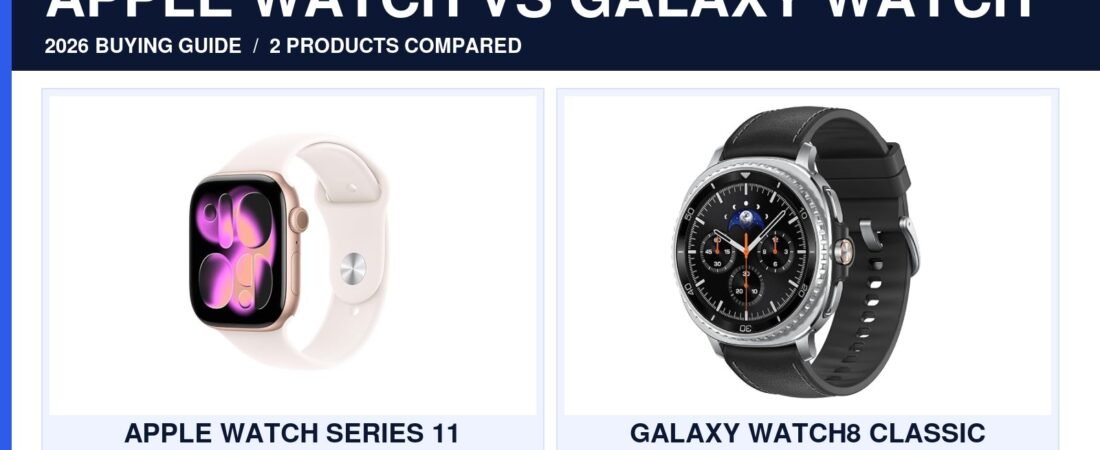
Choosing between these watches is simpler than the spec sheets make it look. Your phone ecosystem makes the first decision; battery habits, health features and design make the second.
iPhone owner? Start with Apple Watch. Galaxy phone owner? Start with Galaxy Watch.
The Apple Watch Series 11 is the natural fit for iPhone users who want tight integration, polished apps and strong safety features. The Galaxy Watch 8 makes more sense for Android users who value customization and Samsung Health. Do not switch ecosystems just because one watch wins a single spec.
Apple Watch vs Samsung Galaxy Watch 2026: the two best fits
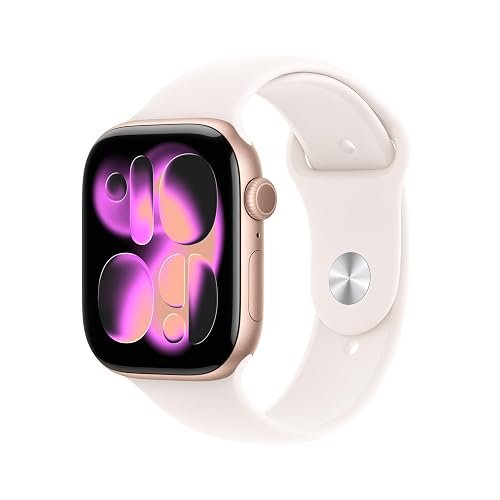
Apple Watch Series 11
Best for iPhone owners who want seamless notifications, Apple Pay, fitness apps and a smartwatch that feels like an extension of the phone.

Galaxy Watch 8 Classic
Best for Samsung Galaxy owners who want deeper Android integration, flexible watch faces and the satisfying physical bezel of the Classic.
Quick comparison: what actually changes your decision?
| What matters | Apple Watch Series 11 | Galaxy Watch 8 |
|---|---|---|
| Best phone match | iPhone | Android, especially Galaxy |
| Navigation style | Digital Crown + touch | Touch; physical bezel on Classic |
| Customization | Clean and controlled | More flexible |
| Health focus | Heart, sleep, activity and safety features | Samsung Health, body metrics and activity insights |
| Buying logic | Choose for ecosystem fit | Choose for ecosystem fit |
The biggest mistake: choosing the watch before the phone
Smartwatches are unusually dependent on the phone in your pocket. That is why this comparison should not begin with screen brightness, sensors or even price. It should begin with compatibility. Apple lists the Series 11 for iPhone 11 or later running iOS 26 or later. In practice, the value of an Apple Watch comes from how naturally it connects with the rest of the Apple experience.
If you already use an iPhone, features such as notifications, calls, Apple Pay, Find My and fitness data feel connected rather than bolted on. That convenience is easy to underestimate when shopping because it does not fit neatly into a specification table. It becomes obvious after hundreds of tiny interactions.
The same logic applies on the Samsung side. A Galaxy Watch is most compelling when your phone, health data and Samsung services already live in the same ecosystem. Buying against your ecosystem because another watch has one attractive feature can create more friction than that feature is worth.
Apple Watch Series 11: where it makes the strongest case
The Series 11 is a mature product rather than a smartwatch trying to prove how many things it can do. Apple rates it for up to 24 hours of normal use and up to 38 hours in Low Power Mode. It also supports fast charging, with Apple stating that around 30 minutes can take it to 80% under its test conditions.
That still means charging is part of the routine, but the tradeoff is a polished experience. The Digital Crown remains one of the nicest ways to move through lists and notifications on a small display. The Series 11 also includes sleep scoring, sleep apnea notifications and a broad set of heart and wellness features, although availability of individual health features can vary by region.
Skip it if: you use Android. The ecosystem mismatch is a deal-breaker, not a minor inconvenience.
Galaxy Watch 8: who will appreciate it more
Samsung approaches the same problem with a little more freedom. The Galaxy Watch family is attractive to people who enjoy changing watch faces, organizing information their own way and using Samsung Health as the center of their fitness routine. The Classic model also has a physical rotating bezel, which gives it a distinct personality and makes navigation feel less dependent on tapping a tiny screen.
For a Galaxy phone owner, that is the important point: the watch feels designed for the environment you already use. Some Samsung health capabilities can depend on phone model, region or software support, so it is worth checking the exact feature you care about before buying rather than assuming every advertised health tool works everywhere.
Skip it if: you own an iPhone or mainly want Apple-specific services.
Battery life matters — but charging habits matter more
Battery comparisons often turn into a contest over the largest number. That can be misleading. A watch that lasts longer is useful, but what matters is whether it survives your actual routine: a workday, a workout, sleep tracking and the time between convenient charging opportunities.
Apple officially rates Series 11 for up to 24 hours in normal use. If you charge while showering or getting ready, that may be perfectly comfortable. If you hate thinking about another charger, battery endurance deserves more weight in your decision. Either way, judge the watch around your habits rather than buying the model with the most impressive number on a product page.
Health features: useful, but do not buy from a checklist
Both ecosystems can track the everyday metrics most buyers expect: activity, workouts, heart rate and sleep-related information. The differences become more specific once you look at advanced features. Apple highlights ECG, sleep apnea notifications, sleep score and other wellness tools on Series 11. Samsung has its own health platform and device-specific measurements.
The smarter buying question is not “which watch has more sensors?” It is “which two or three measurements will I actually check after the first month?” A feature you use every morning is worth far more than five advanced metrics you open once.
Design and comfort: the underrated reason people keep a watch
A smartwatch can have excellent software and still end up in a drawer if it feels awkward on your wrist. Apple keeps its recognizable rectangular design, while Samsung offers a more conventional round-watch appearance. Neither is objectively better.
If you wear a watch with office clothes, at the gym and while sleeping, band choice can matter almost as much as the watch itself. A softer sport band for workouts and a cleaner band for everyday wear can change how versatile the device feels. We have a separate guide to the best Apple Watch bands if you want to build around the Apple side.
Which smartwatch should you buy in 2026?
Buy the Apple Watch Series 11 if your main phone is an iPhone and you want the least friction. Its biggest advantage is not one headline specification; it is how consistently the watch fits into the Apple ecosystem.
Buy the Galaxy Watch 8 if you use Android, especially a Samsung Galaxy phone, and want a smartwatch that feels native to that world. The Classic is especially appealing if you prefer physical controls and a traditional watch shape.
Do not switch phone ecosystems for either watch alone. That is the key conclusion. These are companion devices. The better watch is usually the one that makes the phone you already like more useful.
There is no universal winner — and that is actually good news.
For iPhone owners, Apple Watch Series 11 is the easy recommendation. For Galaxy owners, Galaxy Watch 8 is the smarter fit. Once compatibility is settled, choose the model and band around battery habits, comfort and the health features you will genuinely use.
Apple Watch vs Samsung Galaxy Watch 2026: FAQ
Can I use the Apple Watch Series 11 with Android?
No. Apple lists Series 11 compatibility with supported iPhones, so Android users should shop within the Wear OS/Galaxy Watch ecosystem instead.
Which watch is better for an iPhone user?
Apple Watch Series 11. The ecosystem integration is the main reason to buy it, and choosing a watch that fights your phone rarely makes sense.
Which watch is better for a Samsung Galaxy phone?
Galaxy Watch 8 is the more natural choice because Samsung services, health features and device integration are designed around Android and Galaxy phones.
Is the Apple Watch Series 11 battery good enough for sleep tracking?
Apple rates it for up to 24 hours of normal use and supports fast charging. Whether that feels sufficient depends on when you prefer to charge, but short daily top-ups can fit naturally into many routines.
Should I buy an Ultra model instead?
Only if you have a clear reason: rugged outdoor use, a larger case, specialized features or a stronger need for extended battery endurance. For everyday notifications, workouts and health tracking, the standard models are usually the more sensible value.
As an Amazon Associate, we earn from qualifying purchases. Prices and availability can change. See our affiliate disclosure for details.