2026 BUYING GUIDE · IPHONE CHARGING
Qi2 vs MagSafe in 2026: Which iPhone Charger Should You Buy?
The Qi2 vs MagSafe gap has shrunk dramatically. On iPhone 17, both standards can now reach up to 25W wireless charging with compatible hardware, so the decision is increasingly about certification, build quality, accessories and price.
Affiliate disclosure: As an Amazon Associate, Mobile Gear Picks earns from qualifying purchases. Prices and availability can change.
Qi2 vs MagSafe at a glance
| Feature | Qi2 25W | Apple MagSafe |
|---|---|---|
| iPhone 17 speed | Up to 25W with compatible certified charger | Up to 25W with current Apple charger |
| Magnetic alignment | Yes | Yes |
| Brand choice | Wide range | Apple-first ecosystem |
| Best reason to buy | Value and choice | Simple Apple compatibility |
Qi2 vs MagSafe charging speed on iPhone 17
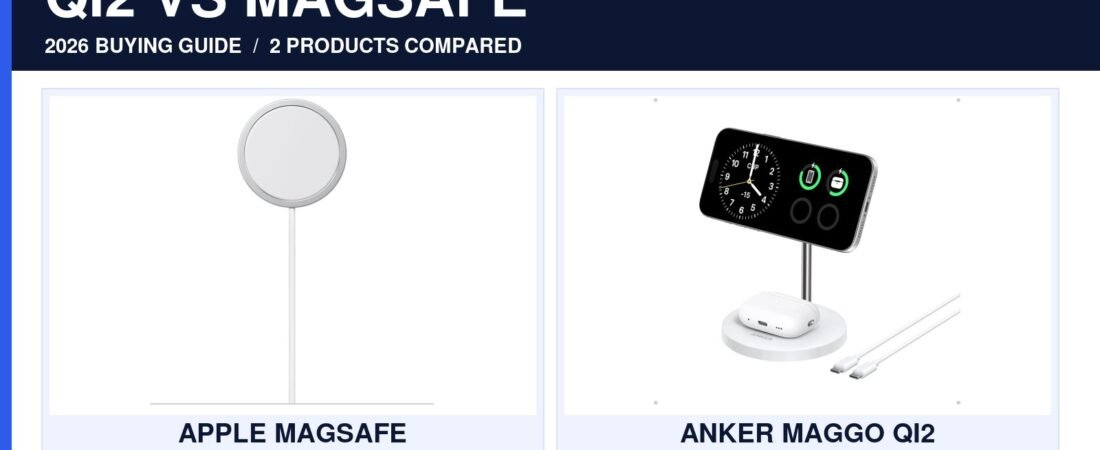
Apple’s iPhone 17 specifications list both MagSafe wireless charging and Qi2 wireless charging at up to 25W. Apple’s current MagSafe Charger is itself certified for Qi2 25W. In practical Qi2 vs MagSafe charging, the important question is whether the charger is genuinely certified for the power level your phone supports.

Where MagSafe still has the edge
MagSafe is the easiest recommendation for someone who wants to buy once and stop thinking about compatibility. Apple’s charger has clear published guidance for compatible iPhones and avoids one marketplace risk: generic magnetic chargers that look similar without supporting the same charging profile.
Where Qi2 wins
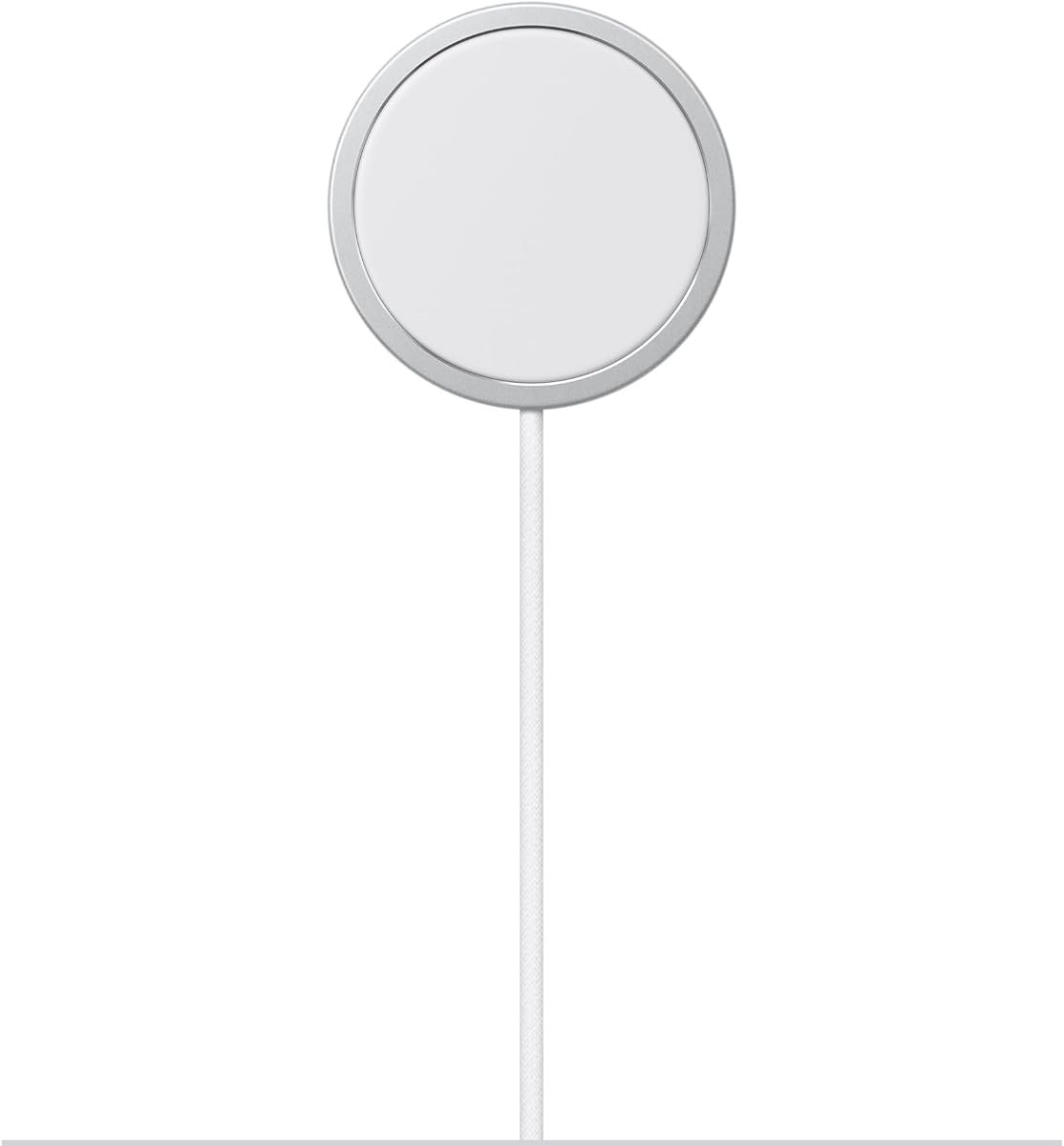
Qi2’s advantage is variety. You can find flat pucks, bedside stands, 3-in-1 stations, car mounts and portable batteries from multiple manufacturers. For many shoppers comparing Qi2 vs MagSafe, that wider choice can mean better pricing and a design that fits the setup more closely.
Best for desks
A Qi2 stand keeps the screen visible while charging.
Best for travel
Compact Qi2 power banks and folding chargers reduce cable clutter.
Best for cars
Qi2 car mounts combine alignment and charging in one accessory.

Do you need a 30W USB-C power adapter?
For Apple’s current MagSafe Charger to reach its fastest supported wireless rate on compatible newer iPhones, Apple recommends pairing it with a 30W USB-C power adapter. A fast charging puck connected to an underpowered wall adapter cannot deliver its full potential.
Heat and battery health
Wireless charging naturally creates more heat than a direct wired connection. iPhone manages charging power to protect the battery, so real-world speed varies with temperature, case thickness, battery percentage and phone use. If maximum efficiency matters more than convenience, a quality USB-C cable remains hard to beat.
Our Qi2 vs MagSafe verdict
Qi2 is now the value winner; MagSafe remains the safe default.
For an iPhone 17 owner, there is no longer a strong reason to reject Qi2 purely because of charging speed. The Qi2 vs MagSafe choice now comes down more to ecosystem, form factor and value. Choose Apple’s MagSafe Charger when you want simplicity; choose certified Qi2 25W when you want a stand, car mount, power bank or better price from a trusted brand.
Shop Qi2 25W chargers on Amazon ↗ Check MagSafe Charger on Amazon ↗
Qi2 vs MagSafe FAQ
Is Qi2 the same as MagSafe?
No, but they now overlap heavily. Qi2 includes magnetic alignment and newer Qi2 25W hardware can match the headline 25W speed supported by MagSafe on iPhone 17.
Will any Qi2 charger give 25W?
No. Check the charger’s specific certification and power rating.
Can I use MagSafe with older iPhones?
Apple supports magnetic alignment across multiple generations starting with iPhone 12, but maximum charging speeds vary by model and power adapter.
Related guides: Best MagSafe & wireless chargers · Best MagSafe power banks · Best USB-C fast chargers
Sources: Apple iPhone 17 technical specifications and Apple MagSafe Charger product information, checked August 2026.
Qi2 vs MagSafe: the practical buying decision
Qi2 and MagSafe overlap because both use magnetic alignment for compatible phones and accessories. The easiest way to shop is to separate three questions: what phone you own, what charging speed the exact charger supports, and whether you need Apple-specific accessory behavior or simply reliable magnetic charging.
For a recent iPhone, a well-certified Qi2 charger can be a strong option when you want broader brand choice. MagSafe-branded accessories may still offer the clearest Apple-first positioning. The label alone is not enough, so check the product specification and certification rather than assuming every magnetic pad performs the same way.
- Verify the supported wireless wattage for your exact iPhone model.
- Check whether a power adapter is included or sold separately.
- Use a magnetic case that keeps the charging coils aligned.
- For stands, confirm the hinge and base stay stable when the phone is removed one-handed.
Magnetic alignment and heat
One advantage of magnetic charging is consistent coil alignment. Better alignment can reduce wasted energy, but wireless charging still creates more heat than a wired USB-C connection. If the phone becomes unusually warm, remove a thick case, avoid direct sunlight and use wired charging when speed and temperature matter more than convenience.
Do you need a 2-in-1 or 3-in-1 charger?
Multi-device stands make sense if you charge an iPhone, Apple Watch and earbuds every night. If you only charge the phone, a simple puck or stand is smaller and usually cheaper. Buy for the devices already on your desk rather than for a hypothetical future setup.
Travel versus bedside use
Foldable magnetic stands are useful for travel because they combine a stand and charger, while heavier desktop stands are better when you want one-handed attachment and removal. A compact puck remains the easiest backup charger to keep in a bag.
Qi2 vs MagSafe buying checklist
- Certification and stated charging output.
- Case compatibility.
- Included power adapter and cable.
- Stand stability if applicable.
- Number of devices you actually charge at once.
Bottom line
For most buyers, certification, real supported wattage and build quality matter more than the logo on the box. Choose the charging system that fits your iPhone, case and everyday setup.
Car mounts, wallets and battery packs
The Qi2 versus MagSafe decision extends beyond bedside chargers. Magnetic car mounts, battery packs and wallets all depend on alignment and case compatibility. If you plan to build a complete accessory setup, choosing certified products from brands that publish compatibility details makes the ecosystem easier to manage.
Why the power adapter still matters
A wireless charger cannot deliver its rated speed if the wall adapter is too weak. Check the recommended input wattage and cable. Some chargers include the adapter, while others include only a USB-C cable, so the real purchase cost can be higher than the headline price.
When wired USB-C is still better
Magnetic charging wins on convenience, but wired USB-C remains useful for faster, cooler or more predictable charging. Many people get the best experience by keeping a magnetic stand on the desk and a USB-C cable in the travel bag.
Common buying mistakes
Avoid choosing by magnet strength alone, assuming every case is compatible, or buying a stand without checking whether it includes a power adapter. The complete setup matters more than one component.