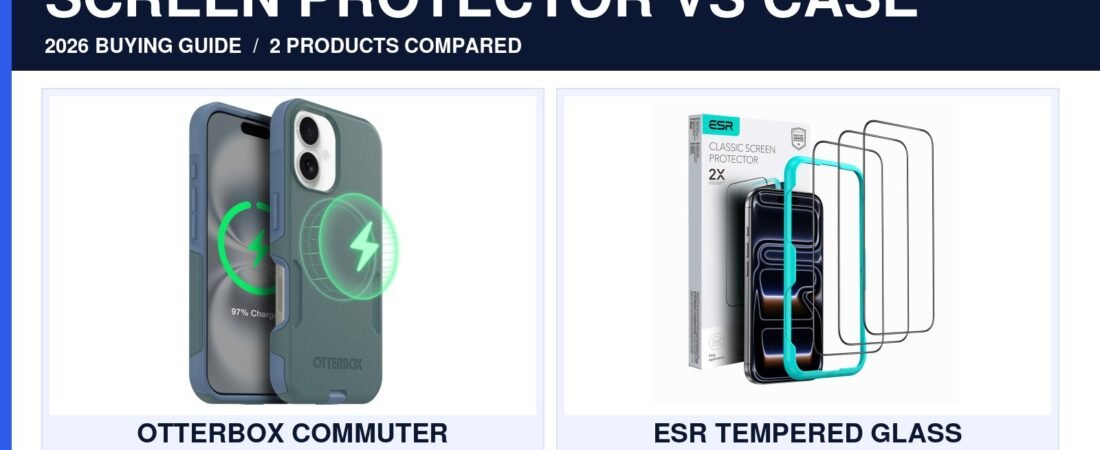
A case and a screen protector solve different problems. The right setup is not about making your phone indestructible; it is about reducing the most common damage without turning a slim device into a brick.
If you want the best protection, use both.
A phone case is the more important first purchase because it cushions corners, edges, cameras and back glass. A tempered-glass screen protector adds a replaceable layer against scratches and direct contact with rough surfaces. If your budget only covers one today, start with a well-fitted case and add the protector next.
Affiliate disclosure: As an Amazon Associate, we earn from qualifying purchases. If you buy through a link below, we may receive a commission at no extra cost to you. Prices and availability can change.
Screen protector vs case: two different jobs
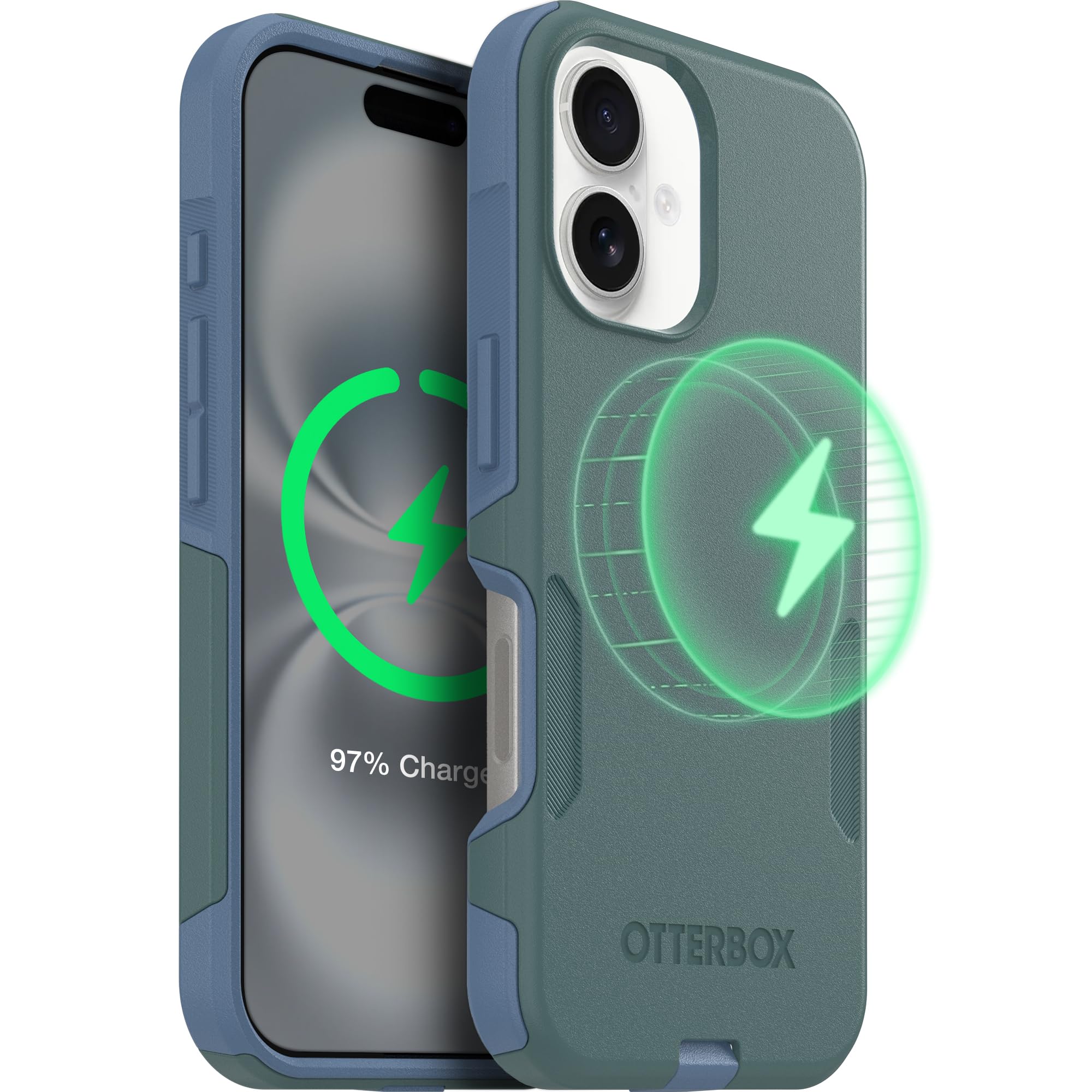
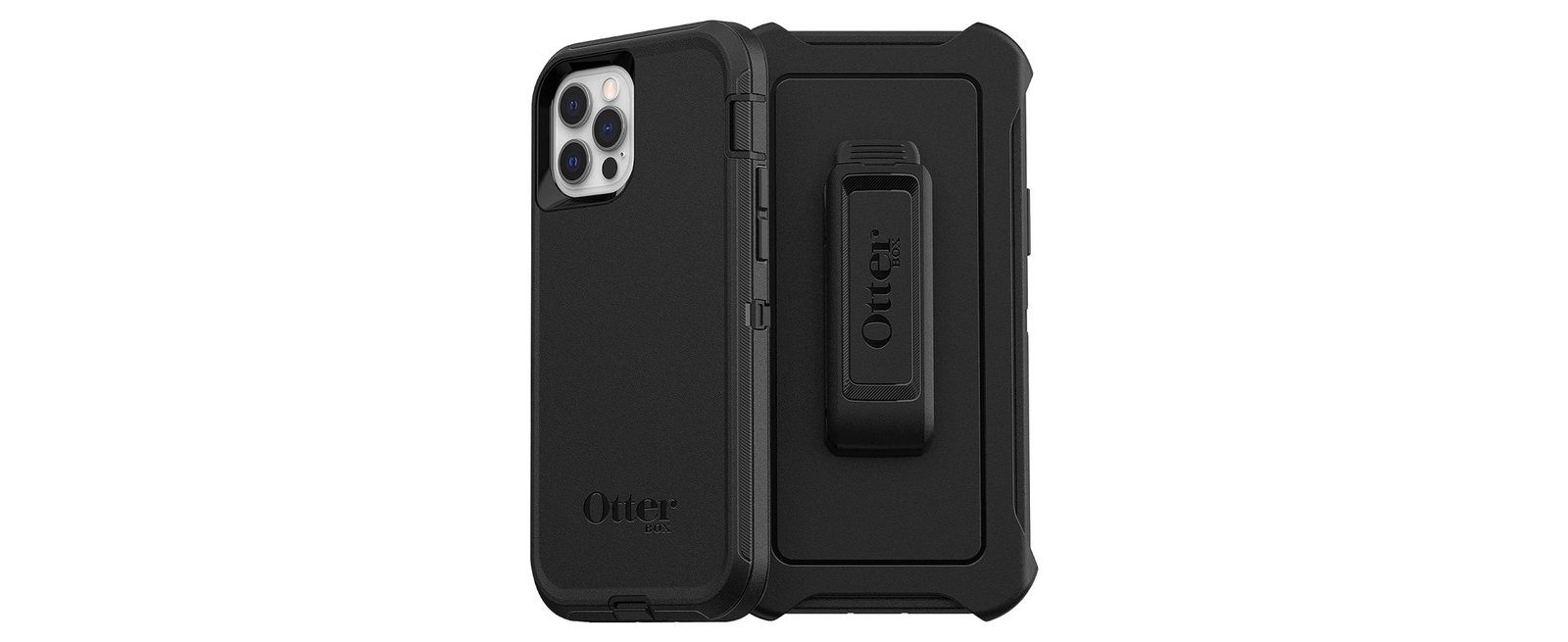
Protective phone case
Cushions corner and edge impacts while protecting the back, buttons and camera area. Look for raised lips and a secure fit.
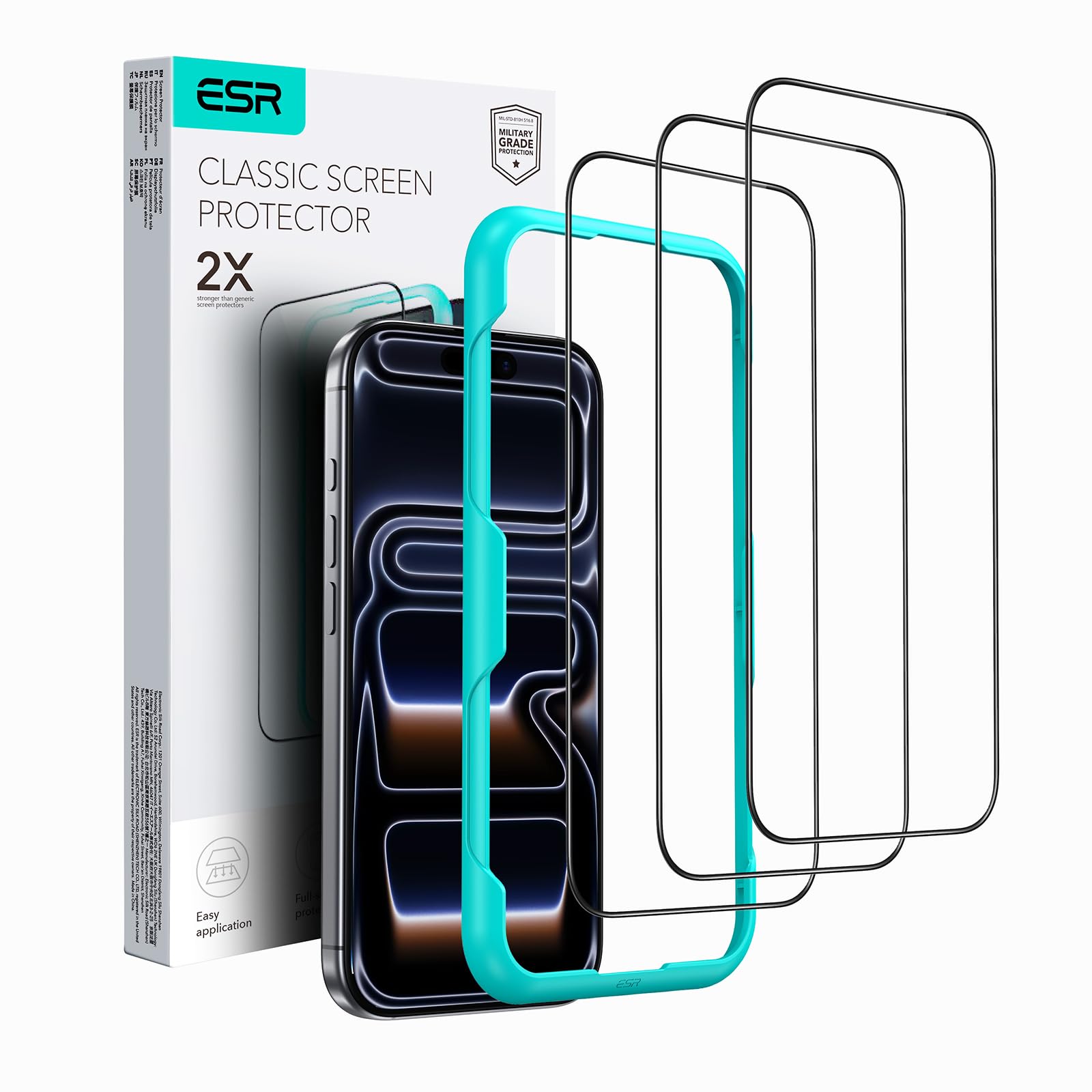
Tempered-glass protector
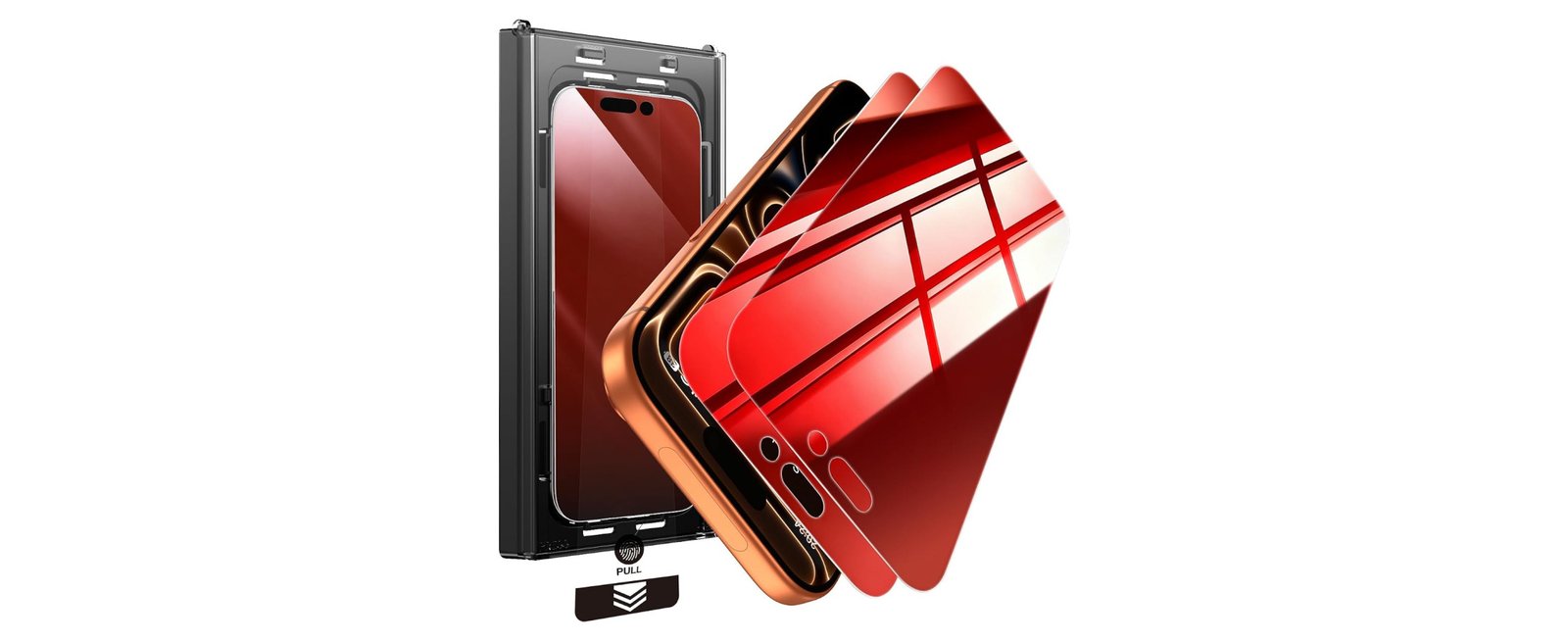
Adds a replaceable surface against scratches, scuffs and some face-first contact. An alignment tray makes installation much easier.
What actually happens when a phone drops?
A phone rarely lands in the neat, flat position shown in advertisements. It can strike a corner, bounce onto an edge and then slide face-down. Each stage puts stress on a different part of the device. That is why the screen protector vs case debate has no universal single-product winner.
The frame and corners usually take the first force. A case creates distance between the phone and the floor and lets a flexible material deform slightly instead of passing all that energy directly into the device. A screen protector cannot wrap around those vulnerable points. Its strength is on the front surface, where keys, grit and direct contact can leave marks.
What a good case protects
The strongest argument for a case is coverage. It protects more than the display: corners, rails, back glass, buttons and the camera bump are all exposed without one. A case with a slightly raised edge can also keep the display from touching a perfectly flat surface.
Material names alone do not tell the whole story. TPU is often flexible and grippy, while polycarbonate can add structure, but construction and fit matter more than a marketing label. A useful everyday case should stay firmly attached, cover the corners and avoid pressing against your screen protector.
Features worth checking before buying a case
- Raised screen lip: creates a small buffer when the phone is placed face-down.
- Camera protection: the edge should sit slightly above the lenses without interfering with photos.
- Corner cushioning: reinforced corners help at the most common first-impact points.
- Grip: preventing a drop is better than surviving one. Very slick cases can defeat the purpose.
- Wireless charging fit: if you use MagSafe or Qi2, choose a case designed for reliable magnetic alignment.
For more model-by-model options, see our guide to the best phone cases in 2026.
What a screen protector protects
A screen protector is a sacrificial surface. It takes everyday abrasion and can be replaced without replacing the phone display. That matters because tiny particles of grit can be harder than the objects people normally worry about. A pocket with no keys can still contain material capable of marking glass.
Tempered glass is the easiest recommendation for most flat-screen phones because it feels closer to the original display and usually provides good clarity. Film protectors are thinner and can suit curved screens or fingerprint-sensor setups, but they generally feel different under a finger and focus more on scratches than impact.
Do you need “9H hardness”?
The label is useful only as a rough category marker, not a promise that the protector cannot scratch. Product pages often present hardness as if it describes real-world drop survival, but thickness, edge coverage, adhesive quality and installation are just as important. A perfectly installed mid-priced protector is usually more useful than a premium one with dust trapped underneath or edges lifting from the case.
Quick comparison: where each one wins
| Protection need | Phone case | Screen protector |
|---|---|---|
| Corner and edge drops | Primary protection | Very limited help |
| Back glass and camera area | Primary protection | No protection |
| Everyday display scratches | Limited to raised-edge spacing | Primary protection |
| Face-down contact with grit | Helps only when the lip keeps the screen clear | Replaceable contact layer |
| Bulk added | Varies from slim to rugged | Usually minimal |
| Best buying order | Buy first | Add second |
When a case alone may be enough
A careful user with a less expensive phone, a generous raised bezel and low concern about micro-scratches may reasonably choose only a case. Some people also prefer the feel and optical clarity of the original display. That is a personal tradeoff, not necessarily a mistake.
The risk rises if you work around tools, sand or rough surfaces; keep the phone in a bag with other objects; or plan to resell it in excellent cosmetic condition. In those situations, a protector is inexpensive insurance against the marks a case cannot stop.
When a screen protector alone is not enough
A protector by itself leaves nearly the entire device exposed. It cannot meaningfully cushion a corner-first fall, prevent a dented frame or shield the rear camera housing. Even if the front protector survives, an impact can still damage other glass or internal components.
If you dislike bulky cases, use a slim case with corner coverage instead of going completely bare. The goal is not maximum armor for every person; it is sensible protection that you will actually keep on the phone.
How to build a case-friendly protection setup
A simple five-step checklist
- Confirm the exact phone model and screen size before ordering.
- Choose a case with raised edges and camera clearance.
- Choose a “case-friendly” protector that does not extend too far into the case border.
- Install the protector in a low-dust room and use the alignment tray if supplied.
- After fitting the case, check every corner for lifting or trapped pressure.
If the protector begins lifting immediately after the case is installed, the two accessories are probably overlapping. Repeatedly pressing the edge down rarely fixes a bad fit. A slightly narrower protector is usually the better solution.
Common mistakes that waste money
Buying by price or thickness alone
A very thick case can still be slippery or poorly fitted. A very expensive protector can still have weak adhesive. Focus on coverage, compatibility and installation design rather than assuming more material or a higher price guarantees better protection.
Leaving a cracked protector installed too long
A small chip is not automatically dangerous, but sharp edges, spreading cracks or loose fragments are signs to replace it. Remove damaged glass carefully and follow the manufacturer’s instructions.
Trusting an old case after a severe impact
Inspect the corners, camera lip and fit after a hard drop. If the case has stretched, split or no longer grips the phone securely, replace it. Protection that has already deformed may not perform the same way again.
Our verdict: case first, protector second, both when possible
A case prevents the broader range of damage, but the strongest everyday setup combines both.
Start with a comfortable case that covers the corners and sits above the camera and display. Add a case-compatible tempered-glass protector to handle scratches and direct surface contact. The best protection is the setup you can forget about during normal use — secure, clear, responsive and not unnecessarily bulky.
Screen protector vs case: FAQ
Should I buy a screen protector or case first?
Buy the case first. It protects the corners, edges, back and camera area, so it covers more possible damage. Add a screen protector as the second layer.
Can a screen protector prevent a cracked display?
It may help in some direct-contact situations, but it cannot guarantee that the display will survive a drop. The drop angle and the case’s corner protection are often more important.
Does tempered glass reduce touch sensitivity?
A compatible, correctly installed protector should preserve normal touch response. Some phones with in-display fingerprint readers may require re-registering fingerprints or enabling a sensitivity setting.
Will any protector fit with any case?
No. A case can push against the protector’s edges and make them lift. Look for “case-friendly” sizing and verify compatibility with your exact phone model.
Does a MagSafe case provide less drop protection?
Not inherently. MagSafe describes magnetic alignment. Drop protection still depends on the case’s materials, corner design, fit and raised edges.
As an Amazon Associate, we earn from qualifying purchases. Product availability can change. See our affiliate disclosure for details.